“Books have been written about Charlie. Buildings have been named in his memory. He is featured in more than 50 “Legacy Spaces” across Canada sponsored by banks, major retailers, universities, performing-arts centres, and governments. Thousands of Canadians from coast to coast “Walk for Wenjack” every October. Children in more than 65,000 classrooms across Canada and in the United States are being taught about his altogether too-short life and tragic death through a book called “Secret Path”.
“Unfortunately, much of what has been written and said about Charlie Wenjack—including some contents of ‘Secret Path’—has no basis in fact.”

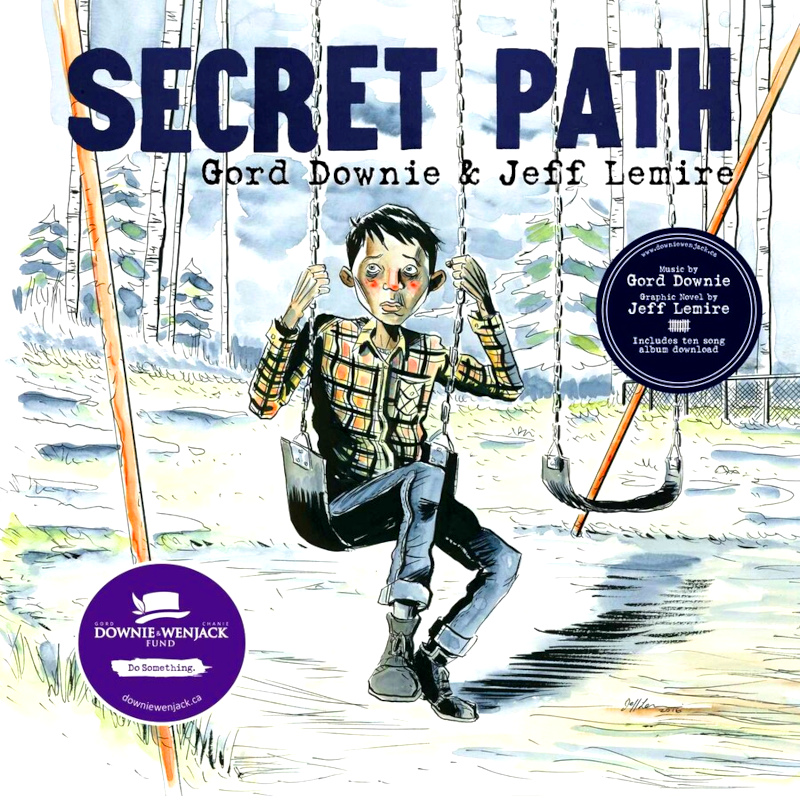
“Teachers in more than 40,000 classrooms across Canada are providing their students with false information about the tragic death of young Chanie {Charlie} Wenjack, whose frozen body was found curled up beside a railway track in northwestern Ontario on October 23, 1966. The primary source of the misinformation is Gord Downie and Jeff Lemire’s “Secret Path”.
“Despite the fact Chanie Wenjack was attending a public school in Kenora and only boarded at the former Cecilia Jeffrey Indian Residential School along with 149 other Aboriginal children from far-away reserves without schools, ‘Secret Path’ shows them praying at classroom desks with a nun looking on.
“There were no nuns at Cecilia Jeffrey. The former residential school was operated by the Women’s Missionary Society of the Presbyterian Church. Nevertheless, school children reading ‘Secret Path’ see drawings of nuns in habits delousing naked Ojibway boys who are covering their genitals with their hands. A male with a large white cross on his chest drags a screaming child into a building. A nun in a habit pulls a half-naked boy’s ear and makes him yell in pain.
“Nothing that was written or said at the time of Chanie’s death suggests that he was physically and/or sexually abused while he was boarding at Cecilia Jeffrey. Nor is there anything suggesting physical and/or sexual abuse in the section about him in the report of the ‘Truth and Reconciliation Commission of Canada’.
“‘Secret Path’ clearly implies that he was.
“Gord Downie’s lyrics say:
“I will not be struck. I’m not going back.”
“What appears to be a pedophile in a clerical collar with a white cross on his chest approaches Chanie’s bed. The young boy looks up with a fearful look on his face.
“As a shivering Chanie is shown shuffling along the railway tracks in an unsuccessful attempt to reach his far-away home, an imaginary male in clerical collar with a white cross on his chest looks menacingly through the trees.
“Gord Downie’s lyrics say:
“I heard them in the dark. Heard the things they do. I heard the heavy whispers. Whispering, ‘Don’t let this touch you’.”
“Children learning about the residential schools through the lens of ‘Secret Path’ in classrooms across Canada appear convinced young Chanie was sexually abused. One of the Grade 6 students at Saskatchewan’s Pilot Butte School in the photo below wrote Gord Downie’s lyric “Don’t let this touch you” on a drawing, showing an apparent victim of sexual abuse.
“Grade 5 students at Toronto’s Dundas Junior Public School are also among the thousands of impressionable children across Canada learning about the Indian residential schools through ‘Secret Path’. Here are a few excerpts from letters they wrote to the Wenjack family after their teacher led them through the book.
“I have heard Chanie’s story and I was mad and sad. I think that the government should do something about repaying the First Nations because no one had done anything about it and it was wrong.”
“Chanie’s story has impacted our lives and we want change…If we continue to educate kids and adults all around the world, history will not repeat itself.”
“Those impressionable young minds had no way of knowing what they were being taught is a total misrepresentation of what actually happened to the young Ojibway boy who has now become a national poster child for all that was wrong with the Indian residential schools – despite the fact he was attending a public school at the time of his death.
“The back cover of ‘Secret Path’ says young Chanie died “trying to escape the Cecilia Jeffrey Indian Residential School”. However, there was no evidence of any prison-like or abusive conditions from which he would have had any reason to “escape”. He had made no attempt to leave Cecilia Jeffrey during the three years he was there – although he did play hooky one afternoon, a week before the start of his fateful journey.
“Colin Wasacase, a Cree/Saulteaux who had attended residential schools as a child and taught at them as an adult, was in charge of Cecilia Jeffrey at that time. His wife was the matron.
“On September 24, 1966 – a month before Chanie’s death — he wrote a letter to Giollo Kelly, Executive Director of National Missions, Women’s Missionary Society, in which he said:
“The weather has been beautiful for the past two weeks and the children have been taking advantage of it by staying away from school and wandering away from the premises. The wanderers have been many. Their reasons all stem to loneliness and various other reasons. We do hope that they will all soon recover from it and settle into the school situation as the year progresses.”
“On September 29, 1966, he wrote again saying:
“The children have begun to settle down a bit. There are only a few girls who persist that school is the worst place to be at ages 12-15, as they feel it isn’t any good. We are having difficulty to convince them that this is not so.”
“On September 30, 1966, Giollo Kelly wrote to Colin Wasacase and said:
“I can well understand that the beautiful fall weather is making the children very restless. I recall being at the school during the month of June a few years ago when it was very difficult to get the youngsters in for their meals. It was the kind of weather which must have made them think of home. I realize that it will be a very trying period for the staff and I do trust that while we do not hope for poor weather, they will soon become accustomed to the routine of the new school year.”
…
“Clearly, there was nothing prison-like at Cecilia Jeffrey. The children wandered at will.
“On the sunny afternoon that Chanie left, he had been playing on the swings in the playground with two orphaned brothers. One of the brothers had run away three times in the last few weeks and the other skipped class on a regular basis. The brothers decided to go and visit their uncle at his cabin, which was about 30 kilometres away.
“Chanie’s best friend testified at the November 17, 1966, coroner’s inquest that Chanie was lonesome and “when the other ‘guys’ were running, he decided to go along”.
“According to the ‘Kenora Miner and Daily News’:
“Wenjack was really lonesome, the [public school] teacher said, and on one occasion told him that he longed to return to his home in the north where he was happy with his family.”
“The newspaper quoted Colin Wasacase as saying:
“The boy had plenty of warm clothing but left in just light apparel.”
“According to the TRC report, Colin Wasacase took immediate action when he learned that Chanie was missing. After canvassing other students about where the boy might have gone,
“[Wasacase] then travelled to Pine Point and Rabbit Lake in the Kenora area in search of the boy and his companions. Indian Affairs official P.C. Clarkin had gone to Rat Portage and Keewatin in search of the boys.”
“It wasn’t until five days after leaving the Cecilia Jeffrey playground with the two orphaned brothers and hanging out with them and his best friend at their uncle’s cabin that Chanie decided to walk to his parents’ home at the fly-in Ojibway community of Ogoki Post on the Marten Falls reserve.
“According to the report in the ‘Kenora Miner and Daily News’:
“There [at the uncle’s cabin] they were fed, cared for and enjoyed trips to a trap line with the uncle. After a few days, the Wenjack lad took his departure and started to walk along the single-track C.N.R. right of way.”
“His friends’ uncle had shown him how to get to the railway tracks that would take him there and told him to ask railway workers for food along the way. That was the last time anyone saw him alive.
“At 11:20 a.m. on the morning of Sunday, October 23, 1966, the engineer of a westbound freight train spotted Chanie’s frozen body curled up at the side of the tracks.
“He had walked a little more than 19 kilometres through snow squalls and freezing rain wearing light, soaked-through, cotton clothing. Evidence of how he must have fainted and fallen as he stumbled along the rough railway tracks was found in bruises on his shins, forehead and over his left eye. A pathologist later concluded he had been dead for 24 hours. His stomach was empty, his lungs full of bacteria.
“After the autopsy, Chanie’s coffin, accompanied by his three younger sisters who had also boarded at Cecilia Jeffrey, was returned to his home at Ogoki Post. Colin Wasacase – who was recognized as an outstanding Ontario senior citizen by Lieutenant Governor David Onley in 2012 and currently serves as a Kenora city councillor – escorted them on the long journey home … He had taken over management of Cecilia Jeffrey less than four months before Chanie’s death.
“In a letter he wrote to Ms. Kelly on November 17, 1966, Colin Wasacase said they identified Chanie’s body at the hospital on the evening of the day he was found. Meanwhile, the police were trying to contact the parents.
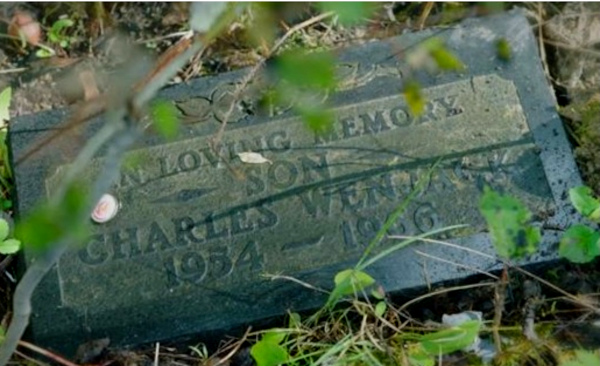
“When the family viewed Chanie’s body during the graveside ceremony, they noticed the stitches from the autopsy and concluded that someone must have stabbed him.
“So they were not going to allow the boy to be buried, or my return, until somebody phoned the O.P.P. and confirmed what I had said about an autopsy”,
Mr. Wasacase wrote.
“When they got through to the OPP on the radio phone, they were assured that Mr. Wasacase had told them the truth about how Chanie died.
*******************
“The back cover of Gord Downie and Jeff Lemire’s ‘Secret Path’ says:
“Chanie Wenjack (misnamed Charlie by his teachers)”.
“However, in media interviews and talking about him with school children, Pearl Wenjack calls her brother “Charlie”. According to a nationally-known ‘Indigenous’ {sic} writer/scholar, who does not wish to be named at this time, the family always called him ‘Charlie’.
*******************
“In a column published in newspapers across Canada, ‘WE Charity’ co-founders Craig and Marc Kielburger said Chanie Wenjack “died fleeing his residential school” and encouraged Canadians to donate money in support of “Legacy Rooms” in restaurants, schools, libraries and corporate boardrooms.
“For a $5,000 donation”,
they wrote,
“the Downie-Wenjack Fund will provide an official plaque and signage explaining Chanie’s story to set the tone for the Legacy Room. The money raised supports initiatives to teach about residential schools in Canadian classrooms.”

“Gord Downie gets top billing on the $5,000 plaques in Legacy Rooms that are now sprouting up across Canada. His trademark hat sits atop the words “The Gord Downie” in boldface. The line below in smaller, lighter, type says: “& Chanie Wenjack Fund”. There’s a photo of Gord Downie performing at one of his concerts on the left side of the plaque and one of a shy, smiling little Chanie on the right.
“One might well ask whose “legacy” is being commemorated.
“Chanie Wenjack’s name is completely overshadowed.
“The plaque looks like part of a donor-supported promotion for the late Gord Downie’s albums.
“On October 28, 2017, the Globe and Mail published an article about a ‘Canada 150’ reconciliation journey through the Northwest Passage on the ‘Polar Prince’. At one point, Aluki Kotierk, president of ‘Nunavut Tunngavik Inc.’ broke down in tears during a group discussion on reconciliation in the ship’s ‘Legacy Room’.
“I just don’t know why in this Legacy Room there is no box of Kleenex”,
she said prompting laughter from her colleagues.
“Or why Gord Downie’s name is bigger than Chanie Wenjack’s” on the plaque on the wall.
“Good question.”
–‘Misinformation Being Taught to Canadian School Children’,
Robert MacBain, FCPP, November 17, 2017
https://fcpp.org/2017/11/17/misinformation-being-taught-to-canadian-school-children/
https://fcpp.org/wp-content/uploads/EF12MisinformationWenjackMacBain.pdf

“What should sensible people do when schoolchildren are told things that are untrue about Canadian history? Perhaps the question should be: What should sensible people do when schoolteachers present fictional material as truth? Of course, a rational observer will say that false information should not be taught in schools. When it is, the misinformation should be corrected immediately.
“The good news is some misinformation that has been taught in Canadian schools for the past four or five years can be easily corrected.
“Robert MacBain has authored a 230-page book that corrects the lies that have been written, sung, and spoken about the short life and tragic death of Charlie Wenjack.
https://www.indigo.ca/en-ca/lonely-death-of-an-ojibway-boy/9780991801770.html
“Charlie was the 12-year-old Ojibway boy who froze to death walking along the CNR rail track east of Kenora in 1966. His name should be remembered because he is
“the most famous Indian Residential School student in Canadian history”.
“Much of what school children and their teachers know about Charlie Wenjack is a lie. It is largely because Gord Downie, lead singer for ‘The Tragically Hip’, wrote songs about this young boy. Those songs were played during his last concert tour and written down in a children’s book, “Secret Path”.
“Downie depicts Charlie Wenjack as being abused sexually and physically at the Cecilia Jeffrey Indian Residential School (CJ) by Roman Catholic priests and nuns. Graphic drawings of nuns in habits delousing Charlie and other boys while a priest with a large cross on his chest drags a screaming Ojibway girl across the playground are depicted in the children’s book, and this falsehood — unfortunately — is prescribed in many schools across Canada.
“To clarify the misinformation, MacBain reports, truthfully, that CJ was managed by the Women’s Missionary Society of the Presbyterian Church of Canada, not by the Roman Catholic Church. Equally as important, he reports that there is no evidence that Charlie was abused in the school.
“MacBain has spent years collecting written information and oral testimonies from former students and employees at the school. He has 300 letters in his files and quotes many of them in this book.
“For example, a student’s mother wrote to the principal. (Spelling and grammar errors have not been corrected.)
“Dear Sir,
“We saw your letter which you wrote to us on Feb. 27. And we will very happy if you could write to us once a month. And let us know how my little girl Mary is doing at school and if she is feeling well.
“We want her to write to us too when you write to us. And we are very happy to hear that they get enough to eat.
“Tell Mary not to get any trouble or wandering off from school.
“You have our Big Thank You for looking after our little girl Mary so well.
“My Best Regards.
“May God Bless and Keep in a good path.
“Yours truly…”
“Four years before Charlie Wenjack froze to death trying to walk to his home community, in January 1962, Stephen T. Robinson, the principal, wrote a letter to parents:
“Dear Parent or Guardian:
“You will be interested in knowing that most of the children have been good and have done fairly well in their school work. You will find the school report enclosed. Those who have low marks will be given extra work so that the next report should be more favourable.
“All the children who were not able to go home at Christmas were invited at some time during the holidays to the homes of white people in our community. I am sure you will be happy to know that they are very fond of your children and many have been invited back to the homes for either a weekend or for the Easter holidays.
“You can be assured that we all love your children and do our best to help them to become good useful citizens who are proud of their Indian heritage.
“Yours very truly.
“Stephen T. Robinson,
“Principal”
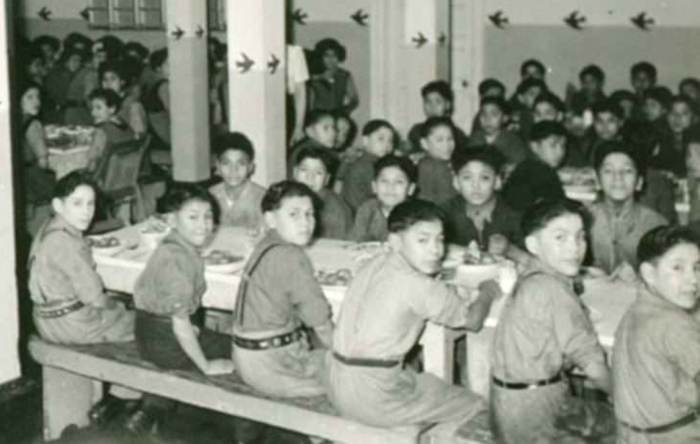
“There are many similar letters in Robert MacBain’s files and in many of these letters, students called the principal and his wife “Mom” and “Dad”, and end their letters with “May God Bless You. Love”.
“Unfortunately, little has been said about the false claims in “Secret Path” and several other stories about the death of Charlie Wenjack.
“There is no mention of the many ‘indigenous’ staff members employed in residential schools, either. Why would these employees have taken part in abusing children who were relatives or the children of friends? During the last year Charlie Wenjack was enrolled in CJ, the principal was Colin Wasacase, a Cree/Saulteaux man from the Ochopowace Band east of Regina.
“Only one-third of the school-aged cohort of ‘indigenous’ children were enrolled in residential schools. Another third were enrolled in day schools, which were remarkably like public schools and a third of the cohort did not attend school at all. These facts are strangely absent from Downie’s “Secret Path”.
“Even though there is considerable disinformation about Charlie Wenjack being used in Canadian classrooms, Canadians who are interested now have an opportunity to read a book challenging the prevailing narrative about this tragedy.
“MacBain reports,
“According to an article that was published in Maclean’s magazine in February 1967, the decision to run away was made on the spur of the moment”.
“We do not know why Charlie Wenjack tried to walk 600 kms home, but it was not because he was abused at CJ. Even so, a charitable foundation named after Gord Downie and Chanie [Charlie] Wenjack is still promoting false information. It was awarded $5 million in 2018 by the federal government to push out “Secret Path” by partnering
“with educators and ‘indigenous’ communities to develop curricula for Canadian schools that accurately describe ‘indigenous’ history”.
“Nevertheless, teachers who use Gord Downie’s “Secret Path” in their courses must read “Lonely Death of an Ojibway Boy”, so they do not lie to their students. The parents of schoolchildren should also read this book and so should all Canadians. The misinformation that is being taught in Canadian classrooms must be corrected as soon as possible. Robert MacBain must be thanked for beginning the correction process in “Lonely Death of an Ojibway Boy”…”
–‘What is the truth about Charlie Wenjack?’,
Rodney Clifton, Western Standard, 16 Dec. 2023
(Rodney A. Clifton is professor emeritus at the University of Manitoba and a senior fellow at the Frontier Centre for Public Policy. He was the senior boys’ supervisor in Stringer Hall, the Anglican residence in Inuvik in the mid-1960s. His most recent book with Mark DeWolf is “From Truth Comes Reconciliation: An Assessment of the Truth and Reconciliation Commission Report”.)
https://www.westernstandard.news/opinion/clifton-what-is-the-truth-about-charlie-wenjack/51035

“A former Indian residential school in northwestern Ontario is widely regarded as being one of the worst in Canadian history. This is primarily because of the way it is misrepresented in a book that is being used in more than 65,000 classrooms across Canada and the United States.
“Children reading the late Gord Downie’s book “Secret Path” see drawings of nuns in habits at what is purported to be Cecilia Jeffrey Indian Residential School, delousing naked Ojibway boys who cover their genitals with their hands. A male with a large white cross on his chest drags a screaming child into a building. A nun in a habit pulls a half-naked boy’s ear making him scream in pain.
“This by itself should suggest a highly inaccurate narrative. Contrary to what “Secret Path” would have people believe, there were no nuns or priests at the Cecilia Jeffrey Indian Residential School (C.J.) in Kenora, Ontario. The school was run by the Presbyterian Church, and none of the staff wore clerical garb.
“The thousands of school children reading this book would be surprised to know that there were no prison-like conditions at the school from which 12-year-old Charlie (a.k.a. “Chanie”) Wenjack, or any other of the 149 ‘Indigenous’ {sic} students enrolled in 1966, would have found it necessary to “escape”.
{Canadian Aboriginals are ‘Indigenous’ to Siberia and Mongolia.}
“In my just-released book, “Lonely Death of an Ojibway Boy”, I document the short life of Charlie Wenjack who died from exposure trying to walk 600 kms to his home after leaving an Ojibway trapper’s cabin where he had stayed for four days. The trapper, who was the uncle of the two boys with whom he walked away from the school “on the spur of the moment”, turned him loose with no food or water and told him to ask railway workers along the way for something to eat.
“Today most Canadians probably think that Charlie left Cecilia Jeffrey Indian Residential School in October of 1966 because he was being abused. They would be surprised to know that a significant number of the students called Principal Stephen T. Robinson and his wife Agnes, the school matron, “Mom” and “Dad”. Several signed their letters “Love”. Many thanked them for being such good “parents” while their children were living away from their homes and families.
“Except when they had to be in class or when meals were served, those children — most of whom, like Charlie, attended nearby public schools and only boarded at Cecilia Jeffrey — were relatively free to come and go as they pleased. Some would wander in the bush. Others would walk into Kenora to visit friends or hang out.
“Stephen T. Robinson, the Principal from 1958 until a few months before Charlie Wenjack’s preventable death, would even arrange for sandwiches to be left in the bush so wandering children would not go hungry. He knew where the children were, and that they would be home in time for supper. They had most likely wandered away because they had not settled down after the freedom they had enjoyed during summer vacation back on their home Reserve. In fact, the senior boys had a trapline which extended all the way around Kenora.
“What follows are more details that give a far more accurate picture of life at Cecilia Jeffrey than Gord Downie’s book presents. A teenage student at home for the holidays at a fly-in reserve about 520 kilometres northeast of Kenora, wrote on the back of the envelope “R.T. [return to] one of your Indian daughters” and addressed Mrs. Robinson as “Dearest Mom”. Towards the end of her letter, she wrote:
“Moms say hi to Pops for me and happy holidays to both of you. Thanks for everything you’ve done for me during the year. I better close off with May God be with You. Love.”
“This letter was dated August 13, 1965, just a little over a year before Charlie Wenjack’s lifeless body was found lying beside the railway tracks just east of Kenora.
“Former students wrote, saying they received letters from their children, saying how much they enjoyed being at Cecilia Jeffrey. Students who had left to go to high school in North Bay wrote about how they were adapting to their new surroundings and expressed thanks for how well they had been cared for by the staff at Cecilia Jeffrey. Some former students who had left because they were needed at home or because of other pressing reasons wrote to ask if the school would take them back. Others said they wanted to come for a visit to renew acquaintances with both staff and friends.
“There is not so much as a hint in the more than 300 letters that I have read about any child being emotionally, physically, or sexually abused by any member of the staff at Cecilia Jeffrey Indian Residential School.
“But none of that is reflected in Gord Downie’s “Secret Path”.
“An entire generation of Canadian students is being seriously misinformed. Contrary to the widely publicized stories we read in the mainstream media about children being scarred for life by horrors they endured in the Indian residential schools, the letters from the students at Cecilia Jeffrey show a significant number of them to be well-adjusted young people brimming with self-confidence.
“Consider, for example, the following excerpts from other letters that former students wrote to Principal Robinson:
“Bonjour monsieur. Well to get straight to the point or subject, the purpose of this brief note is to ask you about a sports jacket. I KNOW it was stupid to forget it but I was under the impression that I would get one here [High school in North Bay]. PLEASE SEND IT as soon as possible; or do you think I should ask the Indian Affairs about one? I haven’t been able to locate a Presbyterian church around here yet. Please send $25.00 because I will need it for fees, yearbook, school ring (unnecessary but desired!) a sweater to brighten up my wardrobe. Some of it for savings. Will be sure to spend wisely. PLEASE SEND SOON!!!”
“Here I am again still wandering around with my hands in my pockets. Just got in Winnipeg a week ago and now I am trying to settle down in Winnipeg, till I get my papers all here and complete…. As of yet, I want to join the air force and also the Manitoba Bell telephone System for a 5-year apprenticeship. Depends who will offer the best deal for a career and who asks first (ha).“
“I do hope everything is going along fine there. I presume everyone is doing well at the school. As for myself, I am doing just fine and dandy. North Bay is another Kenora on a bigger scale. I find it very interesting. I’m boarding with William Cromarty at Mrs. Roger Noe’s house. These people are good to us and make us right at home. We live about a mile and a half from the centre of North Bay.”
“Hello! I finally found out your address and had to ask everybody in the city. Ha. Well, I’m doing fine yet, and guess what? We had a four-day holiday, it’s because of the teachers, they had to have their practicing of hair styling. We had a lady come to our class and she’s a top hair stylist in the States. They have to work up to Sunday midnight. If I had known about this I would have gone to Kenora. But anyway I’ll be there next weekend for a visit.”
“We are very sorry to see you [Principal Robinson] go as you and Agnes been so good to us and also to everybody. We don’t know how to express our thanks. As you are the only people that really put us on the right track so here’s hoping that we see a lot of you and Agnes.”
“I’d like to say for the boys & for myself that we are saying thanks for giving us the helping hand while we were at C.J.”
“Since I came here [Teulon Girls Home] I’ve looked forward to come over on Christmas holidays for a visit, but it’s hopeless, because I don’t have enough money to pay my way. Mrs. Nowels might think or does that I’m getting along fine. In which she is very mistaken. It maybe not be nice to say that but I’m telling you the truth. My heart aches for “Good Old C.J. School,” instead of this place. I’m fine again. I had a bad cold for several days. Hope all of you characters are doing fine. I’m saying a big, fat, juicy ‘hello’ to the children. May God bless you all.”
“How different are these letter excerpts from the horror chamber picture that Gord Downie concocted in ‘Secret Path’, the book that is being read in more than 65,000 classrooms across North America.
“It is indeed unfortunate that most of the C.J. students are no longer around to bear testimony to how much they benefited from their time at what is now widely considered to be one of the worst Indian residential schools in Canadian history. As shown above, a significant number of students said they felt loved and cared for at the residence.
“What young Canadians would have heard if some of those former CJ students had been given an opportunity to tell them of life at Cecilia Jeffrey IRS is not known. But, alas, they will never have that opportunity.
“Our school children deserve much better, and in the “Lonely Death of an Ojibway Boy”, I try to correct the terrible misrepresentation that Canadians have been given about the short life and tragic death of Charlie Wenjack.”
–‘The Notorious Indian Residential School That Wasn’t a Horror Chamber After All’,
Robert MacBain, ISRG, DECEMBER 12, 2023
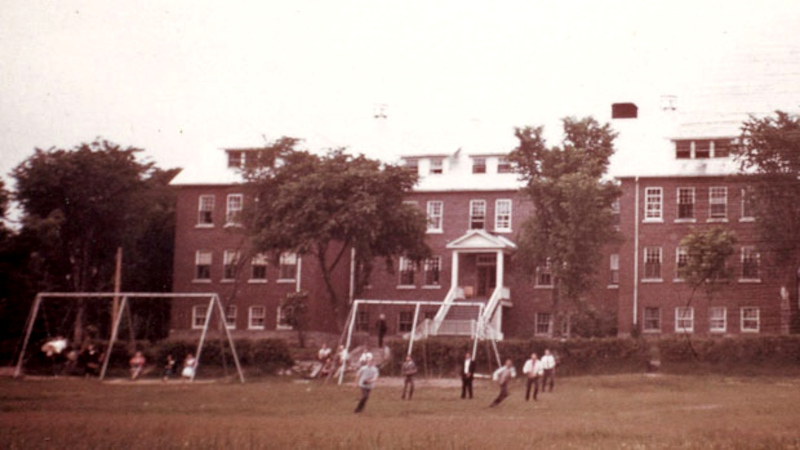
“Thousands of children are falsely taught that Roman Catholic nuns chopped off Charlie’s hair and a priest assaulted Charlie Wenjack. Cecilia Jeffrey Indian Residential School was managed by the Women’s Missionary Society of the Presbyterian Church of Canada; at the time of Charlie’s death, there was an ‘Indigenous’ principal, Colin Wasacase. It was never a Catholic facility.
“Corporations are paying to license ‘legacy rooms’ for a sham history that defames and denigrates Catholics … There was never a Catholic priest or nun at the school! And no evidence that Charlie was assaulted.”
https://x.com/stirlingmg/status/1736160119753236959?s=20
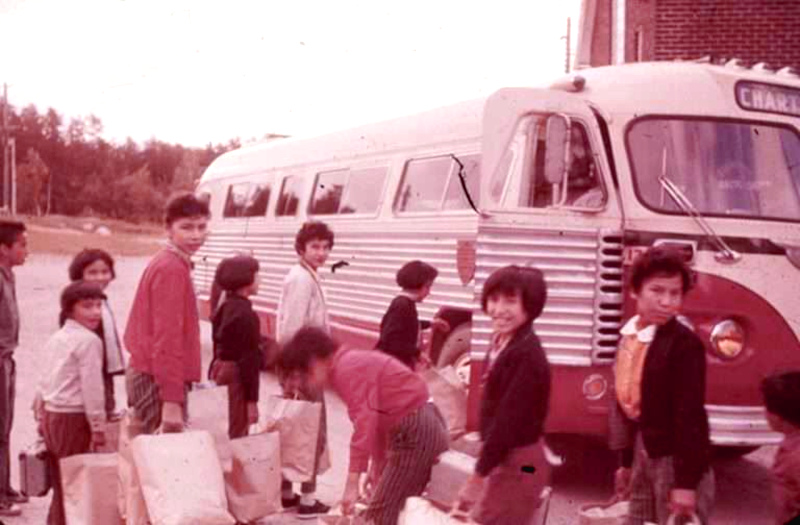
And if that isn’t enough:
“The doors were never locked. There was no gate at the open-pillared road entrance, and no fence on the opposite side of the property. Nothing would have prevented Charlie or any other child from leaving the school whenever they felt like it.”
“Charlie Wenjack has come to symbolise the deadly horrors of Canada’s Residential Schools. Unfortunately, many details of his tragic story have been misrepresented in the process.
“On the sunny afternoon of October 16, 1966, just a few weeks into the school year, 12-year-old Charlie (aka “Chanie”) Wenjack was enjoying himself on the swings in the playground at the back of Cecilia Jeffrey (CJ) Indian Residential School in northwestern Ontario. Seven days later, his lifeless body was found lying beside the railway tracks about 70 kilometres east of the Ontario–Manitoba border.
“Today, Charlie Wenjack is the most famous Residential school student in Canadian history—a symbol of the suffering endured by ‘Indigenous’ children who were ‘forced’ {?} to attend ‘White’-run boarding schools away from their families.
“Books have been written about Charlie. Buildings have been named in his memory. He is featured in more than 50 “Legacy Spaces” across Canada sponsored by banks, major retailers, universities, performing-arts centres, and governments. Thousands of Canadians from coast to coast “Walk for Wenjack” every October. Children in more than 65,000 classrooms across Canada and in the United States are being taught about his altogether too-short life and tragic death through a book called “Secret Path”.
“Unfortunately, much of what has been written and said about Charlie Wenjack—including some contents of ‘Secret Path’—has no basis in fact.
“While it is absolutely true that he longed to be back with his family, and that he died of exposure while trying to make the ill-advised trek back home, lurid depictions of Charlie being preyed upon by priests and nuns within a schoolhouse full of gothic horrors are completely ahistorical. (Indeed, there were no priests or nuns working at CJ at the time Charlie attended.) What follows below is part of the true story of his short life and tragic death.
“Two orphaned brothers were with Charlie at the swings on the afternoon of October 16, 1966—13-year-old Ralph McDonald and his 11-year-old brother Jack. Their parents had been run over by a train in the middle of the night two years previously, and had been buried at the Ojibwa Presbyterian Cemetery at the opposite end of Round Lake from CJ. According to the June 19, 1958, issue of the ‘Kenora Daily Miner and News’, the cemetery “is a last resting place for Christian Indians in this area”. Staff from Cecilia Jeffrey Indian Residential School took care of the cemetery until after the school was closed in 1976, and the property was transferred to the Grand Council Treaty #3. (Since that time, unfortunately, the cemetery has been neglected and is now overgrown with weeds.)
“Kenora is an almost entirely ‘White’ community with a population of approximately 15,000, located at the north end of the Lake of the Woods. The Cecilia Jeffrey Indian Residential School, which was operated by the Women’s Missionary Society of the Presbyterian Church in Canada, was set on a former 60-hectare farm. Its facilities were used to house not only its own young Residential School students, but also somewhat older ‘Indigenous’ students—Charlie included—who studied at nearby public schools.
“Residential schools had existed in Canada since the nineteenth century. But in 1951, the country’s {segregationist} ‘Indian Act’ was amended so as to enable the federal government to arrange with its provincial counterparts and school boards to have ‘Indigenous’ students educated in normal public schools. By 1960, the number of ‘Indigenous’ students attending public schools (9,479) was equal to the number in Residential Schools (9,471).
“At Cecilia Jeffrey, however, a reverse form of integration had taken place. Starting in 1960, a significant number of ‘White’ students, including those from a public school called Rabbit Lake, were transferred to the Residential School.
“In a letter to the editor published in the January 18, 1961, ‘Daily Miner and News’, then-Principal Stephen T. Robinson said a new school was to have been built on the Cecilia Jeffrey property to accommodate 50–60 ‘Indigenous’ students—plus students from ‘White’ schools in the immediate area—as a means to relieve overcrowding in the public system. However, the project was delayed and, in consultation with the local school board, it was decided that 80 ‘White’ students would join the ‘Indigenous’ students at Cecilia Jeffrey.
“This was an era when ‘Black’ and ‘White’ students were being integrated in the United States. And this Canadian project was no doubt seen as, in some ways, a similar endeavour.
“Working and playing in these surroundings”,
Principal Robinson said,
“have given both of these groups of children a good understanding of each other”.
“A local newspaper reporter interviewed two ‘White’ and two ‘Indigenous’ students in Grade 8 to get their reaction to the reverse integration process. “Except for some shyness on the part of the girls, there seems to have been no problem”, the journalist concluded.
“One ‘White’ student said he’d been at Kenora’s Rabbit Lake School until 1960, and was told he was being moved to Cecilia Jeffrey.
“I did not have any feeling against it”,
he said.
“I am here [at Cecilia Jeffrey] and I like it. There is more to do, and we are able to take shop, which I like. There are bigger playing fields. I don’t care whether Indians or other boys are on the team… If I were asked to choose on my own whether or not to come to Cecilia Jeffrey, I would come.”
“An Indigenous’ student from Sandy Lake, more than 500 kilometres north of Kenora, had been at Cecilia Jeffrey for several years, and told the local newspaper:
“I did not mind when I learned that Rabbit Lake [School] pupils were coming to CJ school. I think it is nice having them here. If we go on to high school, it will be good for us to get used to non-Indian friends before we get there. We learn more English with more English-speaking kids around.”
“Another ‘White’ student from the Rabbit Lake School said she’d been at another public school before Rabbit Lake.
“I felt a little funny about coming here [to Cecilia Jeffrey] at first, but I like the girls and we all get along fine. One thing which I enjoy a lot at CJ School is our nice home-economics department.”
“A student from the Lac des Mille Lacs Band at Upsula, about 350 kilometres east of Kenora, described her feelings when the ‘White’ students first arrived at Cecilia Jeffrey:
“We girls felt shy when [‘White’] outsiders first came to our school, but now we are glad they are here. I have some non-Indian friends among my classmates. My sister has a very close friend who is a ‘White’ girl. They phone each other every night. There doesn’t seem to be much difference between us all.”
“By the time Charlie arrived at Cecilia Jeffrey, a new public school had been built nearby to accommodate local ‘White’ students and Indigenous’ students who would board at Cecilia Jeffrey.
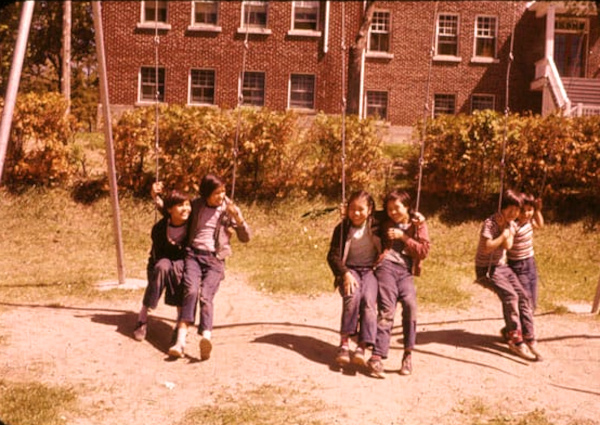
“Charlie’s friend Ralph McDonald is known to have run away from CJ three times that Fall. Charlie, on the other hand, had made no attempt to run away during the three years he’d been at the school. However, he had skipped class at the local public school he was attending one afternoon a week previously.
“For that infraction, Charlie was spanked by the new principal, Colin Wasacase, a Cree/Saulteaux educator from the Ochopowace Band east of Regina who had himself attended Residential Schools as a child and taught at two of them as an adult.
“According to a ‘Daily Miner and News’ report on the inquest into Charlie’s death, it was a restless Ralph McDonald who took the initiative to leave that Sunday afternoon “because he wanted to visit his uncle, whom he liked”. The newspaper quoted Ralph saying he much preferred trapping animals with his uncle to being in school.
“The newspaper also reported that Charlie’s best friend, 10-year-old Eddie Cameron, testified that Charlie was lonely and, when the McDonald brothers headed for their uncle’s cabin, he decided to tag along with them.
“According to a February 1967 article by Ian Adams, published in Maclean’s, the decision to run away had been made on the spur of the moment.
“Right there on the playground, the three boys decided to run away… It was a sunny afternoon, and they were wearing only light clothing. If they had planned it a little better, they could have taken along their parkas and overshoes. That might have saved Charlie’s life.”
“Three of Charlie’s sisters, who were also at Cecilia Jeffrey, might well have been on the playground that Sunday afternoon. Wherever they were, he didn’t say goodbye to them, which suggests that he intended to return after the visit to the uncle’s cabin.
“During one of the many interviews I conducted in Kenora for my newly published book, “Lonely Death of an Ojibway Boy”, a former senior staffer at CJ, Abe Loewen, told me the doors were never locked. There was no gate at the open-pillared road entrance, and no fence on the opposite side of the property. Nothing would have prevented Charlie or any other child from leaving the school whenever they felt like it.
“In a letter that Principal Colin Wasacase wrote to the Women’s Missionary Society a month before Charlie’s death, he reported that a large number of children had taken advantage of the warm weather “by staying away from school and wandering away from the premises”. He said he hoped they would soon lose the urge to wander and “settle into the school situation as the year progresses”.
“He wrote another letter a few days later, indicating that the children had indeed started to settle down a bit, and only a few persisted in wandering away from the property.
“In response, a senior staff member of the Women’s Missionary Society of the Presbyterian Church—which oversaw the school’s operations—wrote that she recalled being at the school a few years previously, and that
“it was very difficult to get the youngsters in for their meals… It was the kind of weather which must have made them think of home. I realize that it will be a very trying period for the staff, and I do trust that while we do not hope for poor weather, they will soon become accustomed to the routine of the new school year”.
“Loewen told me that Robinson, who’d been the principal from 1958 until a few months before Charlie’s death, used to arrange for sandwiches to be left in the bush so that wandering children wouldn’t go hungry. He knew where they were and that they’d be home in time for supper. They’d most likely wandered away because they hadn’t settled down after enjoying the freedom they’d enjoyed during the summer vacation back on their home reserves. In fact, the senior boys maintained a trap line that extended all the way around Kenora.
“Charlie and the McDonald brothers were free to come and go as they pleased, outside of classes, and this was, after all, a Sunday afternoon. According to journalistic accounts, Charlie and the McDonald brothers spent the first night away from school about 30 kilometres north of Kenora. at a cabin owned by a ‘White’ man the brothers referred to as “Mr. Benson”. He gave the exhausted boys something to eat and let them sleep on his floor.
“They walked less than a kilometre the next morning to the cabin where the brothers’ uncle, Charles Kelly, lived with his wife, Clara, and two teenage daughters.
“Adams reported that the uncle, like many Ojibways in the area, then lived a hard life; and, despite the modest income he derived from welfare and trapping, his family was often desperate for food. He also reported that it was obvious that Kelly cared for his nephews and was uncertain about what to do about the fact that they were supposed to be in school.
“I told the boys they would have to go back”,
Kelly told Adams.
“They said if I sent them back, they would run away again. I didn’t know what to do. They won’t stay at the school. I couldn’t let them run around in the bush. So I let them stay. It was a terrible mistake.”
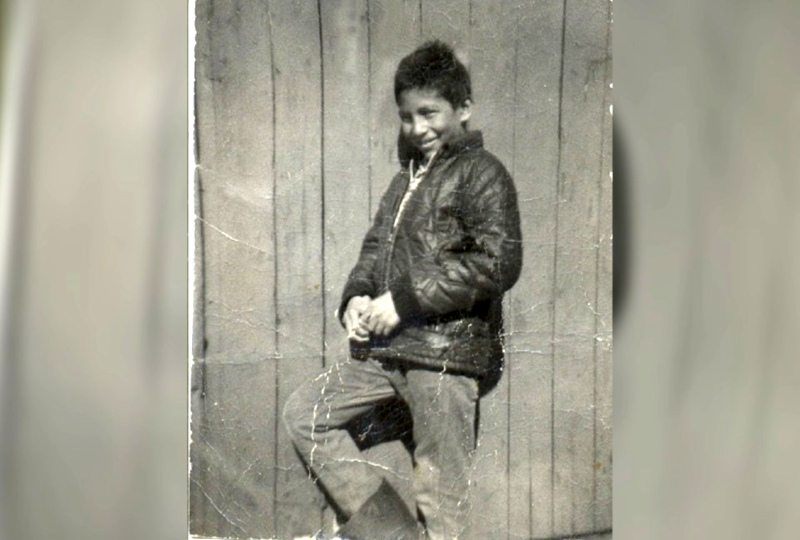
“Charlie Wenjack was born on January 19, 1954, at the remote, fly-in Ojibway community of Ogoki Post on the Albany River up near James Bay. His father was a fur trapper.
“Ogoki Post is part of ‘Marten Falls Indian Reserve No. 65’. Starting around 1784, the area had been the site of a Hudson’s Bay Company supply depot, which served traders operating from Hudson Bay heading to points farther south. It subsequently became one of the reserves included in Treaty No. 9, which covered 145,000 square kilometres inhabited by approximately 2,500 Ojibways and Crees. When the treaty was signed in 1905, the population of Marten Falls was approximately 150.
“This is an important post of the Hudson’s Bay Company”,
the treaty commissioners reported.
“[But a] first glance at the Indians served to convince that they were not equal in physical development to those at Osnaburg or Fort Hope [farther south], and the comparative poverty of their hunting grounds may account for this fact.”
“…A feast was held after the treaty was signed.
“Chief [William] Whitehead made an excellent speech, in which he described the benefits that would follow the treaty and his gratitude to the King and the government for extending a helping and protecting hand to the Indians”,
the Commissioners reported.
(One of the four headmen who signed Treaty No 9 with an ‘X’ at Marten Falls on Tuesday, July 25, 1905 was listed as William Weenjack. He could very well have been one of Charlie Wenjack’s relatives.)
“In the 1930s and 1940s, when Charlie’s father James and mother Agnes were growing up, people at Marten Falls lived in teepees and prospector tents. There was no electricity or plumbing. The only means of transportation was by dog teams, canoes, and York boats. Most babies were born in the bush with assistance from midwives. In winter, the newborns would be wrapped in blankets made of rabbit fur to keep them warm. Dried moss was used instead of diapers. Homemade cradleboards were used to keep the babies safe on their mothers’ backs. As they got older and started to walk, bigger cradleboards were constructed.
“The girls learned at a young age how to make lacing for the snowshoes and moccasins and mittens. The boys would be out in the bush with their father, learning how to trap, hunt, and cut wood. The main food was moose meat, supplemented by rabbits and partridges.
“In late September of each year, the families would head for their trap lines and stay out in the bush until May or June. But game was getting scarce at that time. Families would sometimes have no pelts to trade at the Hudson’s Bay Company store for food and other items.
“In their spare time, families would get together for dancing, playing cards, and renewing acquaintances. When the children returned home from Residential School in June, a square dance was held to celebrate having them home for the summer months.
“According to records kept by the Department of Indian Affairs, town site planning and development didn’t start until the 1970s. Up until the 1980s, there were no sewers or waterworks. As of June, 2022, approximately 650 individuals were registered as ‘status Indians’ at Marten Falls. Of those, about half were still living on the reserve…
*******************
“Charlie Wenjack was nine when he first arrived at Cecilia Jeffrey Indian Residential School. Getting there required an hour-long plane ride, followed by more than 10 hours on a train.
“There is no record of anything Charlie said about the way he was treated during the three years he was at Cecilia Jeffrey.
“However, other students who were at the school at or around the same time as Charlie wrote letters describing the school as a place where they felt loved and cared for.
“A significant number of the students called Principal Stephen Robinson and his wife, Agnes, who was the school matron, “Dad” and “Mom”. Many thanked them for being such good caregivers to them while they were living hundreds of kilometres away from their homes and family. Parents who had attended the school wrote letters saying they had enjoyed their time there and appreciated the way their children were being cared for.
“One teenage student at home for the holidays at a fly-in reserve about 520 kilometres northeast of Kenora addressed Mrs. Robinson as “Dearest Mom”. Toward the end of her letter, she wrote: “Moms, say hi to Pops for me and happy holidays to both of you. Thanks for everything you’ve done for me during the year. I better close off with May God be with You”. The letter was dated August 13, 1965, a little over a year before Charlie Wenjack’s death.
“Former students who’d left because they were needed at home, or for other reasons, such as running away, wrote, asking if the school would please take them back. Others said they wanted to come for a visit and renew acquaintances with the staff and friends they’d made while they were at the school.
“In the more than 300 letters that I have read, there isn’t so much as a hint of any child being emotionally, physically, or sexually abused by any member of the CJ staff—though we certainly do know that such abuse did take place at other Residential schools.
“There was, however, a significant amount of bullying among the students. And younger children were reluctant to report such bullying for fear of retribution.
{‘Compensating Student-On-Student Abuse’:
“What about all the other Canadians who suffered from abuse at school?
Why are they not deserving of compensation?
Wasn’t a government responsible for those schools, and weren’t children forced to attend?”
*******************
“Charlie’s best friend, Eddie Cameron, was one of the boys who showed up at Charles Kelly’s cabin on Monday morning. He was another of the uncle’s nephews and, according to Adams, this “gathering of relations subtly put Charlie Wenjack out in the cold”.
“Adams reported that when he interviewed them after Charlie’s death, Kelly and his wife referred to Charlie as “the stranger”. The Kellys “had no idea where Charlie’s reserve was or how to get there”.
“Charlie had, by this point, made the approximately 600-kilometre trip seven times, and so would have been able to tell them about having to take the plane and the train. It would have been abundantly clear that there was absolutely no way the 12-year-old boy could make it home on foot.
“According to Adams’ account in ‘Maclean’s’,
“Nobody told Charlie to go. Nobody told him to stay, either. But as the days passed, Charlie got the message”.
“I’ve often wondered why Charlie stayed with the Kellys for four days after leaving the school. It strikes me that he wasn’t in any particular hurry to get home. Perhaps—and it’s only a perhaps—he would have tagged along with his friends if they’d gone back to school, just as he’d tagged along when Ralph McDonald decided he wanted to visit his uncle. But we don’t know.
“On the Thursday morning, three days after their arrival, Kelly decided to take his three nephews about five kilometres north to his trapline at Mud Lake.
“It was too dangerous for five in the canoe”,
Adams quoted him saying,
“so I told the stranger [Charlie] he would have to stay behind.”
“Charlie remained at the cabin and played by himself for a while, Adams reported, and then he told Clara Kelly he was leaving. He asked for some matches so he could warm himself by a fire along the way.
“It was late October, and in this part of Canada, the temperature was already dropping significantly at night. All Charlie had to protect himself from the bitter cold was a light cotton windbreaker. Mrs. Kelly gave him some wooden matches in a little glass jar and some fried potatoes mixed with strips of bacon.
“Instead of striking east along the Canadian National Railway’s right-of-way toward his far-away home, Charlie walked north about five kilometres and met the other boys and Kelly. Adams reports that all they had to eat that night was two potatoes that Kelly cooked and divided among the boys. The uncle had nothing for himself to eat or drink except some tea.
“During one of my interviews in Kenora with (former) Principal Wasacase, he told me that he’d become quite concerned when he discovered that Charlie was missing. He searched Rabbit Lake and other nearby areas while an Indian Affairs official searched around the Rat Portage Indian reserve and the Keewatin area west of Kenora. Meanwhile, police tried to contact Charlie’s parents at Ogoki Post.
“On making inquiries, Wasacase learned that Charlie had been on the swings in the playground with the McDonald brothers. He told me that he knew their uncle lived about 30 kilometres away. When there was still no word of the boy’s whereabouts by Thursday, he decided to drive to the uncle’s cabin on a hunch that Charlie might be there.
“He knocked on the cabin door three days before Charlie’s lifeless body was found beside the railway tracks. Clara Kelly answered, and told him that neither the boys nor Charlie had been there. In fact, Charlie had been at her home since Monday morning and was alive and well with her husband and nephews at the trapline, less than five kilometres away.
“Wasacase told me he still wasn’t sure why she didn’t tell him the truth. He thought it might have been because she didn’t want to cause trouble for her three nephews. There’s also the possibility she might have feared getting herself and her husband in trouble for not notifying the authorities, as an inquest jury later concluded they should have.
“According to Adams, Charles Kelly told Charlie on Friday morning that he’d have to walk back to the main cabin because there wasn’t enough room for him in the canoe. Charlie said that was okay, because he’d decided to walk home to be with his father and wouldn’t be going back to the cabin.
“I never said nothing to that”,
Kelly said, according to Adams.
“I showed him a good trail down to the [nearby] railroad tracks. I told him to ask the section men along the way for some food.”
“In the official form that he prepared in support of an inquest into Charlie’s death, Coroner Dr R. Glenn Davidson wrote,
“they [the boys] stayed at the Kellys for a few days, and then Wenjack was told to leave. Wenjack was given some matches in a glass container and a map by Kelly’s wife. It is believed he left about 3:00 pm October 19 [Wednesday] to head east”.
“One reason why Dr. Davidson had the wrong date—in fact, Mr. Kelly didn’t show Charlie the way to the nearby railway tracks until Friday, October 21—was that the magazine article describing Charlie’s trip to the trap line wasn’t published until more than three months after his death. That important information wasn’t available to Dr. Davidson at the time he issued the warrant for the inquest.
“Dr. Davidson wrote in his report that one of the reasons he’d decided to hold the inquest was
“to ascertain if [Charles] Kelly turned the boy loose with no food to travel over 300 miles east, on the [railway] track”.
“That hike (which would take even a well-provisioned adult two weeks to complete) would have taken Charlie to the town of Nakina in north central Ontario, from where he’d have to take a plane to get to Ogoki Post. He had no food, water, or money. And it isn’t clear how he would have convinced anyone to fly him back to his reserve, even if he’d managed to complete the hike.
“Charles Kelly testified at the inquest that Charlie had left without his knowledge, contradicting his statement to Adams that he’d showed Charlie how to get down to the railway tracks on Friday morning. In the end, the inquest jury issued a handwritten report that concluded that both “Mr. Benson” (at whose cabin the boys stayed Sunday night) and Kelly “should have notified the authorities of the [boys’] presence”.
“We can only speculate about what serious consequences there would have been for Charles Kelly if the coroner and the jury had known that Charlie had been at his trapline cabin on Thursday night and that he’d turned him loose Friday morning with neither food nor water, nor much idea of where he was going.
“Charles Kelly was the last person known to have seen Charlie alive. The boy made it only about 20 kilometres east on the railway tracks through snow squalls and freezing rain, wearing a light cotton windbreaker, before fainting and falling on his back.
“The engineer of a westbound freight train spotted his lifeless body lying beside the railway tracks at a rock cut just before noon on Sunday morning—seven days after he’d been playing on the swings with the McDonald brothers at Cecilia Jeffrey.
“Charlie must have fallen several times because bruises were found later on his shins, forehead and over his left eye”,
Adams wrote in Maclean’s.
“And then at some point on Saturday night, Charlie fell backward in a faint and never got up again. That’s the position they found him in.”
“Dr. Davidson listed the cause of Charlie’s death as “exposure to cold and wet”. He also said,
“the deceased was not strong, and was very quiet and likely timid, as many young Indian children are who have little to do with town life”.
“Charlie was, indeed, a very slight, frail, little boy. It would appear from the autopsy report that he had contracted tuberculosis several years before his death. Gravel was found on his face and mouth. His stomach was empty. He’d been dead for about twenty-four hours.
“It was a truly tragic end for this young Ojibway boy, who had no choice but to attend an Indian Residential School 600 kilometres from his home and family. And he might very well be alive today if any of the three adults he’d come in contact with after tagging along with the McDonald brothers on that bright Sunday afternoon of October 16, 1966 had notified the school or the police.”
“Charlie Wenjack would have celebrated his 70th birthday on Saturday, January 19, 2024.”
–‘The Lonely Death of an Ojibway Boy’,
Robert MacBain. IRSRG, June 13, 2024
(“Originally published in ‘Quillette’ on April 23 2024
https://irsrg.ca/articles/the-lonely-death-of-an-ojibway-boy/
“This essay has been adapted, with permission, from the author’s newly published book, “Lonely Death of an Ojibway Boy”.”
https://www.amazon.ca/Lonely-Death-Ojibway-Robert-Macbain/dp/0991801776 )
See also:
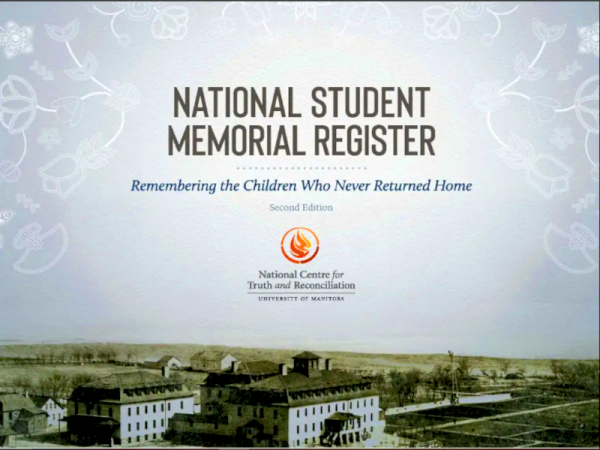 ‘U. of Manitoba Lies About Student Deaths’ (National Student Memorial) {May 27, 2025}:
“Why has Canada twice been referred to the International Criminal Court on the basis of false claims about Indian residential schools? The answer is simple. The ultimate cause is the University of Manitoba’s ‘National Student Memorial’ which falsely claims that it is a list of students who died on the premises of Indian residential schools and students who went missing from Indian residential schools.”
https://endracebasedlaw.ca/2025/05/27/u-of-manitoba-lies-about-student-deaths/
 ‘Grave Error’ {Dec.4, 2024}:
“All members of the Indian Residential School Research Group (IRSRG) agree on the main point of ‘Grave Error’,
“that no persuasive evidence has yet been offered by anyone for the existence of unmarked graves, missing children, murder, or genocide in residential schools”.
https://endracebasedlaw.com/2024/12/04/grave-error/
 ‘Hate, Combined With Ignorance’ {Aug.16, 2023}:
“Barbara Kay announced the creation of a new website dedicated to finding the truth about Residential schools: https://irsrg.ca
“The responses were largely indicative of how successful the billion-dollar Aboriginal Industry propaganda has been in convincing Canadians – particularly the youth, thanks to educational indoctrination and shaming – of the myth that Residential schools were organized to be ‘Genocidal’ institutions {It also shows the need for websites like this}. The hatred expressed by many of the responders – very few claim to be Aboriginal – is indicative of the emotional brainwashing that so many of them received in our schools.
P.S. These hate-filled messages are typical of the abuse we were deluged with when we were first trying to get ERBL off the ground…”
https://endracebasedlaw.ca/2023/08/16/hate-combined-with-ignorance/
‘Terrorists Burning Canadian Churches’ (Mass Graves Hoax) {Oct.31, 2023};
“83 Christian churches in Canada have been vandalized, burned down or desecrated since the announcement of the apparent discovery of graves found near a residential school in Kamloops, B.C.”
{No graves were found…}
“Here is the full list of churches that have been targeted by the radical vandals…”
https://endracebasedlaw.ca/2023/10/31/terrorists-burning-canadian-churches/
‘Bishop Challenges Residential School Lies’ {Sept.15, 2023}:
“The current strategy of letting the ‘Indigenous’ voices have their unexamined, uncritiqued (and) unquestioned platform has been a colossal failure.”
“As he lay in a Calgary hospital bed in late July, retired Bishop Fred Henry summoned the energy to publicly break the silence around what he considers the prevailing lie about missing Indian residential school children.”
https://endracebasedlaw.ca/2023/09/15/bishop-challenges-residential-school-lies/
 ‘Mark Carney’s Residential School Connection’ (Robert Carney) {June 22, 2025}:
“Mark Carney as Prime Minister shares many things with his predecessor, Justin Trudeau, one of which is the way that both of them contradict their own fathers when it comes to the Aboriginal issue – despite the fact that the fathers knew far more about the subject than their foolish, virtue-signaling sons…
“‘Liberal’ {Party} Leader Mark Carney distanced himself from comments his late father made 60 years ago as an educator and his subsequent defence of residential schools in the later years of his life.”
https://endracebasedlaw.com/2025/06/22/mark-carneys-residential-school-connection/
 ‘Another Canadian University Teaching Anti-‘White’ Racism’ (Dalhousie U.) {Sept.15, 2022}:
“More Canadian university anti-‘White’ systemic racism:
“Dalhousie University’s Faculty of Medicine is offering an online “white fragility clinic” for faculty and staff as part of its continuing professional development program. The clinic, which is being hosted by Dr. Gaynor Watson Creed {a ‘Black’ woman} and Dr. Eli Manning, professes to teach future physicians about “the concept of ‘whiteness’ and its role in racism”.”
♠♠♠♠♠♠♠♠♠♠♠♠♠♠♠♠♠♠♠♠♠♠♠♠♠♠♠♠♠♠♠
Websites:
END RACE BASED LAW inc. Canada
https://endracebasedlaw.wordpress.com/
ERBL Canada Daily News Feed Blog
https://endracebasedlawcanadanews.wordpress.com/
♠♠♠♠♠♠♠♠♠♠♠♠♠♠♠♠♠♠♠♠♠♠♠♠♠♠♠♠♠♠♠
Facebook:
ERBL Main Page
https://www.facebook.com/ENDRACEBASEDLAW
ERBL Canada Daily News Feed Blog
https://www.facebook.com/groups/ENDRACEBASEDLAWnewsCanada
♠♠♠♠♠♠♠♠♠♠♠♠♠♠♠♠♠♠♠♠♠♠♠♠♠♠♠♠♠♠♠
TWITTER (X): https://twitter.com/ERBLincCanada
♠♠♠♠♠♠♠♠♠♠♠♠♠♠♠♠♠♠♠♠♠♠♠♠♠♠♠♠♠♠♠
Petition to END RACE BASED LAW
https://endracebasedlaw.wordpress.com/petition-canada/
JOIN US IN THE FUTURE OF A UNIFIED CANADA
 END RACE BASED LAW inc. Canada FEATURE STORIES